
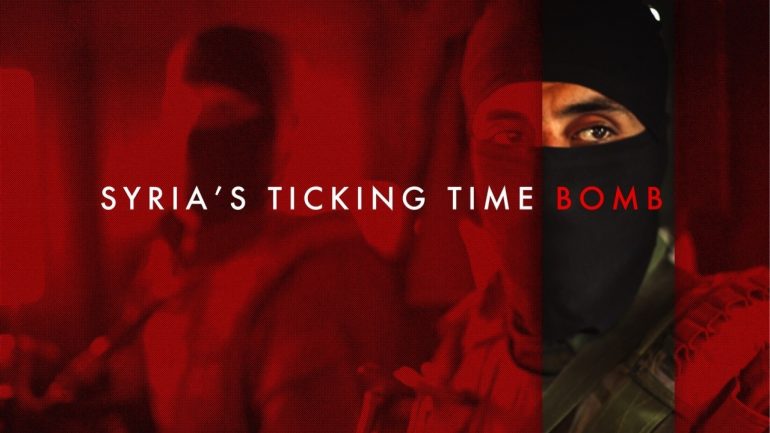
In the expanse of northern Syria, a multitude of former IS militants find themselves confined within heavily fortified prisons. Amidst this challenging environment, a burgeoning generation of potential jihadists is maturing, their futures shaped by the tumultuous legacy of the Islamic State.
February 2023 marked a seismic event that thrust northern Syria back into the global spotlight, an area that had long languished in relative obscurity despite once serving as the stronghold for the notorious terrorist organization, IS. Despite its military defeat, the region poses a potential resurgence point for IS, carrying profound international implications.
Filmmaker Kawa Akrawi delved into the heart of northeastern Syria’s autonomous and democratically governed enclave in 2022. In “Rojava,” as the Kurds refer to the region, the filmmaker witnessed firsthand the challenges faced by the predominantly Kurdish population. The Kurdish militia YPG, backed by U.S. forces, engaged in a fierce battle against IS until 2019, resulting in thousands of casualties among the fighters.
Following the triumph over the IS caliphate, the region became home to the largest prison for IS fighters globally. Additionally, it houses expansive camps dedicated to the wives and children of jihadists, many hailing from Western countries whose governments have shunned repatriation.
Within these sprawling camps and prisons, concerns arise about the emergence of the next generation of jihadists. Newroz Ehmed, representing the SDF General Command of the military alliance, asserts that while IS may have been territorially defeated, its ideology and organizational remnants remain active—an explosive situation exacerbated by the immense challenges faced by security forces in controlling the facilities.
Complicating matters further, Turkish President Erdogan’s prolonged conflict with the Kurds in northeastern Syria has led to the displacement of tens of thousands, with accusations labeling the YPG as a terrorist organization. Drone attacks on the “Rojava” region persist, intensifying the region’s instability.
Amidst these adversities, Kurdish leaders grapple with the pressing question of safeguarding themselves, neighboring nations, and the West from a potential IS resurgence. Plans must be devised to address the presence of Islamist fighters and their indoctrinated offspring, who, raised in camps, risk evolving into fervent and ruthless combatants.
Directed by: Kawa Akrawi
The point about the camps raising a new generation is the part that stuck with me. It’s easy to call IS defeated territorially and move on, but the documentary makes clear the ideology didn’t disappear with the caliphate. What’s frustrating is how Western governments avoid repatriating their own citizens and leave the Kurds to manage the fallout. That isn’t sustainable, and the film doesn’t pretend otherwise. Related resource: 6 Letter Word Finder
The point about the camps raising a new generation is the part that stuck with me. It’s easy to call IS defeated territorially and move on, but the documentary makes clear the ideology didn’t surrender with the caliphate. What I keep wondering is why Western governments that won’t repatriate their citizens aren’t funding the SDF to handle this properly. Leaving it to an under-resourced Kurdish force while Turkish drones keep hitting the region seems like a recipe for exactly the resurgence the film warns about. Related resource: Angel Numbers List“>
The point about the camps raising a new generation is the part that stuck with me. It’s easy to call IS defeated territorially and move on, but the documentary makes clear the ideology didn’t disappear with the caliphate. What frustrates me is how Western governments avoid repatriating their own citizens and leave the Kurds to handle the fallout. That’s not a sustainable strategy, it’s just outsourcing a problem until it grows. Related resource: CopyBox ou
This documentary does a good job laying out how layered the situation already was before the clock started ticking. For anyone who wants a break between the heavier chapters, the ensemble storytelling here reminded me of browsing the All Wishes Come True Tieguai Li lore pages — different world, same theme of unlikely figures carrying enormous weight.
This documentary on Syria’s ticking time bomb is a gripping look at the ongoing crisis. The footage of the prisons and the new generation of jihadists is both eye-opening and sobering. For those interested in AI video tools, ObjectRemover AI can help clean up such footage: ObjectRemover AI.
This documentary on Syria’s ticking time bomb is a gripping look at the ongoing crisis. The footage of the prisons and the new generation of jihadists is both eye-opening and sobering. For those interested in AI video tools, ObjectRemover AI can help clean up such footage: ObjectRemover AI.
The documentary’s focus on the prisons holding former IS militants in northern Syria is striking.
The camps for wives and children make the long-term security risk feel very real.
It also raises important questions about Rojava and the future of the region.
The way the documentary highlights the “burgeoning generation” of children in these camps is what really sticks with me. It’s terrifying to think that while the military defeat of the caliphate was a massive victory, the vacuum being filled by radicalization in these fortified prisons might actually be a more long-term threat than the original conflict. We often focus on the immediate geopolitical shifts, but the human element—specifically the lack of repatriation for families from Western countries—creates this permanent, volatile underclass. It feels like the world is just waiting for a spark to ignite these camps. I was actually discussing the concept of systemic instability and how environments shape future outcomes on lily lovebraids recently, and this footage provides such a grim, real-world validation of those theories. If the international community continues to shun the responsibility of repatriation, we aren’t just managing a crisis; we are essentially subsidizing the next generation of recruitment.
The way the article describes the “burgeoning generation of potential jihadists” maturing in these fortified prisons is incredibly chilling. It highlights a cycle of radicalization that most people in the West don’t fully grasp—that defeating a caliphate militarily is only half the battle if the social infrastructure for the next generation is left in total decay. When you consider that these camps house families from Western countries who have been shunned by their own governments, it creates this massive, unresolved geopolitical tension. It’s not just a local conflict; it’s a vacuum of responsibility. I’ve spent a lot of time looking into how complex narratives and long-term consequences play out in different media, and I actually touched on the concept of systemic fallout on lily lovebraids when discussing how environments shape character development. In this case, the environment in Rojava isn’t just shaping individuals; it’s potentially shaping the future of global security. If the international community continues to ignore the humanitarian crisis in these camps, the “ticking time bomb” isn’t just a metaphor—it’s an inevitability.
The article’s description of former IS militants and their children within prisons and camps in northern Syria truly highlights the difficult long-term consequences of the conflict. It’s concerning to think about a new generation being raised in such an environment, potentially radicalized by the very legacy of those held captive. The mention of Western governments shunning repatriation for the families of jihadists adds another layer of complexity to this already dire situation. I’ve been exploring the complexities of rebuilding and reintegrating communities in different contexts, and the challenges here seem immense. It makes me wonder about the long-term strategies being considered to prevent these camps from becoming breeding grounds for future extremism. The whole scenario feels like a massive, unresolved issue that will continue to have ripple effects for years to come.
It’s truly chilling to think about the sheer scale of the prisons and camps holding former IS militants and their families in northeastern Syria. The article highlights how this region, once the IS stronghold, is now a “ticking time bomb” because these facilities are essentially breeding grounds for a new generation with extremist ideologies. I’ve been following discussions about long-term solutions for these displaced populations, and it feels like a problem with no easy answers for any of the involved governments. The article touches on the international implications, and it makes me wonder about the strategies being discussed to de-radicalize these individuals and prevent further radicalization. It makes me think about how complex societal issues can be, and how sometimes the most challenging problems require the most creative solutions, much like how I approach building complex character builds in games, constantly looking for that optimal strategy on Borderlands 4 toolkit.
The article’s point about a “burgeoning generation of potential jihadists maturing” within the prisons and camps is particularly chilling. It highlights how the defeat of ISIS militarily hasn’t eradicated the ideology or the conditions that foster it. The sheer scale of the prisons and camps, holding not just fighters but their families, many of whom are from Western nations, presents an immense, long-term challenge. It makes me wonder about the practicalities of de-radicalization programs in such a context, and what pathways exist for these individuals to reintegrate into society without posing a threat. I’ve explored how technology can aid in visualization and planning for various environments, and it strikes me that similar innovative approaches might be needed to tackle complex social issues like this, perhaps even in redesigning rehabilitation strategies. You can see some of what I’ve worked on at AI Room Designer.
The article’s point about the prisons in northern Syria becoming breeding grounds for future jihadists really hits home. It’s a grim thought, but logically, if you have thousands of radicalized individuals, many of them with children growing up in that environment, the seeds of a new extremist generation are being sown. This reminds me of some of the challenges we’ve discussed when looking at long-term conflict resolution and societal rebuilding. It’s not just about defeating a group militarily; it’s about addressing the underlying issues that allow them to fester. I wrote about a similar approach to managing complex situations and potential blowback on Borderlands 4 toolkit and found that focusing on rehabilitation and family reintegration, however difficult, is crucial for breaking cycles of violence. The international community needs to find a way to engage without ignoring the reality of these camps and prisons.
The article vividly paints a picture of the complex situation in northeastern Syria, and the “ticking time bomb” metaphor feels incredibly accurate. It’s particularly chilling to think about the children growing up in these camps, essentially being indoctrinated into a new generation of extremism, especially with the article mentioning how many are from Western countries whose governments refuse repatriation. It’s a humanitarian and security crisis rolled into one. I’ve been tracking some rather unusual geological formations and their historical significance for a project, and it struck me how easily overlooked, seemingly insignificant details can hold immense potential energy, much like these camps. Perhaps understanding the root causes and offering genuine alternatives, beyond just containment, is the only way to defuse it. It’s a massive challenge, but one that can’t be ignored.
The article highlights the grim reality of former IS militants and their families being held in northern Syria, and the concern that this environment could breed a new generation of extremists. It’s a profoundly disturbing thought, especially when considering the long-term implications for global security. The author’s mention of Western governments shunning repatriation is particularly striking; while understandable from a security perspective, it leaves these individuals and their children in a precarious situation with uncertain futures. I’ve often thought about the logistical and humanitarian challenges involved in processing individuals from conflict zones, from initial identification to documentation. It makes me wonder about the practicalities of even verifying identities and travel documents, especially for those who might have lost everything. I wrote about a similar approach to ensuring accurate documentation for travel purposes on AnyPassportPhoto and found that even for routine matters, precision is key. This situation, however, is on a vastly different scale.
The article’s point about a “burgeoning generation of potential jihadists maturing” within these prisons and camps in northern Syria is particularly chilling. It highlights the long-term consequences of conflict that extend far beyond military victories. It makes me wonder about the rehabilitative efforts, if any, being undertaken. Without effective programs, these facilities risk becoming breeding grounds for further extremism, a point Kawa Akrawi’s documentary seems to explore. I’ve been experimenting with AI to visualize different societal outcomes in complex scenarios, and the idea of intergenerational radicalization is a critical factor to consider in any long-term solution. I wrote about a similar approach to analyzing complex societal issues on AI Interior Lab and found that understanding the root causes and potential future trajectories is absolutely vital.
The idea of former IS militants being held in prisons in northern Syria, and the subsequent rise of a new generation susceptible to radicalization, is a truly chilling prospect. It’s hard to imagine the long-term implications, especially with so many children growing up in these environments. The article touches on the international aspect, with Western governments refusing repatriation, which seems like a shortsighted solution that just pushes the problem elsewhere. I wrote about a similar approach to community reintegration on lily lovebraids and found that ignoring the root causes, however difficult, only leads to bigger issues down the line. It makes you wonder what the end game is for these families and if there’s any hope for rehabilitation.
The article touches on the incredibly complex issue of former IS militants and their families being held in northeastern Syria, and it really highlights the international ramifications of this situation. It’s sobering to think about the next generation growing up in these camps, potentially radicalized by the very ideology their parents fought for. I’ve been thinking about how similar situations, like managing large groups of disaffected individuals, can have long-term consequences, and I wrote about a similar approach to managing complex systems on Borderlands 4 toolkit and found that proactive, long-term strategies are crucial, something that seems desperately needed here. The article mentions thousands of casualties among the YPG fighters, underscoring the immense sacrifice made to defeat IS, making the current predicament even more tragic.
The article’s point about the prisons in northeastern Syria holding former IS militants and the surrounding camps housing their families really struck me. It’s a complex situation, especially the idea that a new generation of potential extremists could be growing up in this environment, shaped by the residual ideology. The challenges of dealing with these individuals, many of whom have foreign ties but whose home countries refuse repatriation, seem immense. It’s almost like a deferred problem. I’ve been tracking some complex resource management scenarios in games lately, and it reminds me in a strange way of how leaving certain elements unaddressed, like in the Pokopia Crystals habitats, can lead to cascading issues down the line. The documentary sounds like it offers crucial insight into that ongoing struggle.
The article’s point about the prisons in northern Syria becoming a breeding ground for future jihadists really hits home. It’s disheartening to think that after all the effort to defeat IS, the infrastructure and conditions might be inadvertently fostering a new generation of extremism. I’ve been exploring how visual media can sometimes inadvertently reinforce narratives, and it makes me wonder about the stories these children are being told within the camps. It makes me think about how important it is to have clear, well-defined visuals, especially when dealing with complex topics. I wrote about a similar approach on AI Image Extender and found that context and clarity are absolutely crucial. The international community’s reluctance to repatriate these individuals, while understandable from a security perspective, seems to be exacerbating this long-term problem.
The article’s point about a “burgeoning generation of potential jihadists maturing” within the prisons and camps is particularly chilling. It highlights how the fight against IS, while militarily successful, hasn’t necessarily eradicated the ideology or the conditions that foster it. The fact that Western governments are shunning repatriation adds another layer of complexity – creating a vacuum where these individuals and their children remain in a volatile environment. It makes me wonder about the long-term strategies being employed beyond just containment. I’ve explored similar themes of unresolved conflict and its generational impact in strategy games, and the parallels to real-world situations like this are stark. You can find some of my thoughts on complex geopolitical scenarios and strategic decision-making at FrontWars.io.
The article’s point about a “burgeoning generation of potential jihadists maturing” within the prisons and camps is particularly chilling. It highlights the long-term consequences of IS’s defeat being far from over. I’ve always been fascinated by how seemingly contained problems can have far-reaching implications, much like how a complex tile-matching puzzle can feel overwhelming but eventually leads to a sense of accomplishment if approached strategically. The challenges of deradicalization and reintegration in these Syrian facilities seem incredibly difficult, and the article makes it clear that ignoring them is not an option, lest we face a more profound crisis down the line. It’s a complex humanitarian and security issue that demands sustained international attention.
The article’s description of “Rojava” as holding the world’s largest prison for IS fighters, alongside camps for their families, really brings home the lingering challenges after the caliphate’s defeat. It’s not just about military victory, but the long-term consequences of holding so many individuals with such a dangerous ideology. The idea of a “burgeoning generation of potential jihadists” maturing in these environments is particularly chilling. It makes me wonder about the effectiveness of current rehabilitation or de-radicalization programs, if any are even in place. It’s a complex issue, and the article aptly highlights the international implications, especially with Western governments hesitant to repatriate their citizens. This situation is almost like a cultural or ideological imprint left behind, similar to how certain symbols can carry deep meaning. I wrote about a similar approach on Tattoo Meanings and found that understanding the roots of symbolism is crucial for interpretation.
It’s chilling to consider the long-term implications of these prisons and camps in northeastern Syria. The article highlights how a new generation is growing up amidst the legacy of IS, which is a recipe for future radicalization. The fact that Western governments are largely refusing to repatriate their citizens’ families, leaving them in these conditions, seems incredibly short-sighted. It feels like a problem being exported rather than solved. I’ve seen similar discussions around how unresolved issues can fester and lead to bigger problems down the line, much like managing in-game economies requires constant attention to prevent imbalance. You can find resources on that sort of thing at Blox Fruits Calculator, and it makes me wonder if there’s a parallel to be drawn with managing complex geopolitical situations.
The article’s description of thousands of former IS militants and their families being held in northern Syria, with a new generation potentially radicalized, is deeply unsettling. It really highlights the lingering consequences of the caliphate’s defeat. I’ve been looking into how technology can help bridge gaps in information and accessibility in challenging regions, and it made me think about how similar issues of under-resourced environments can be addressed. For instance, in real estate, we’ve seen how tools like VirtualStagingAI can transform unappealing spaces, and I wonder if analogous technological solutions could be applied to improve conditions or provide educational resources in places like these camps, even in a limited capacity. The idea of “virtual” solutions for real-world problems is something I find fascinating.
The article highlights the disturbing reality of former IS militants and their families being held in northern Syria, and the potential for a new generation of extremists to emerge. It’s a stark reminder that simply defeating a group militarily doesn’t resolve the underlying issues. I found myself thinking about the sheer logistical and ethical challenges of managing these detention centers and camps. How do you prevent radicalization within their walls, and what are the long-term plans for these individuals, especially the children? It’s a complex problem with no easy answers, and it’s crucial for the international community to grapple with it before the situation deteriorates further. I wrote about a similar approach to dealing with complex situations and the importance of addressing root causes on VirtualStagingAI and found that proactive solutions are always more effective than reactive ones.
The article’s point about the prisons holding former IS militants becoming incubators for future jihadists is particularly chilling. It highlights the immense challenge of rehabilitation and reintegration, especially when dealing with ideologies that are so deeply ingrained. I recall reading about similar difficulties in managing former combatants in other conflict zones; the long-term implications are often underestimated. The situation with the camps for wives and children, many from Western nations, also raises difficult questions about national responsibility versus international obligation. It’s a complex problem with no easy answers, and the potential for instability if these issues aren’t addressed is immense. I’ve seen discussions on how to approach such complex societal issues on NTE Codes Hub, and the parallels in terms of long-term strategy and potential for future conflict are striking.
The article’s focus on the prisons and camps in northern Syria housing former IS fighters and their families really struck a chord. It’s a stark reminder that defeating a group militarily doesn’t erase the ideology or the people influenced by it. The idea of a “burgeoning generation of potential jihadists maturing” in these environments is particularly chilling. It echoes some of the challenges we’ve seen in other post-conflict zones where rehabilitation and integration efforts are crucial but often fall short. I’ve found that understanding the scale of these complex situations can be aided by visual aids, much like how a detailed Subnautica 2 Map helps players navigate difficult terrain. The international community’s reluctance to repatriate individuals from Western countries seems to be creating a long-term problem, leaving these regions to bear the brunt of the consequences.
The article’s point about a “burgeoning generation of potential jihadists maturing” within the prisons and camps is particularly chilling. It highlights how the fight against ISIS might not be truly over, but rather evolving into a new, insidious threat. I’ve been thinking a lot about how to represent complex situations visually, and this documentary sounds like it captures that struggle. It reminds me of some of the challenges I’ve explored when trying to design meaningful imagery for difficult subjects, even in a completely different context like myink ai. The idea that these children are growing up in an environment shaped by extremist ideology, with governments unwilling to repatriate their citizens, paints a grim picture for the future stability of the region and beyond.
The article’s focus on the prisons and camps in northern Syria, holding former IS fighters and their families, really brings home the long-term consequences of the conflict. It’s sobering to think about the next generation growing up in that environment, potentially radicalized. I’ve been exploring how to visually represent the impact of such situations, and it made me think about the challenges in capturing the human element, even for something as seemingly straightforward as professional portraits. Creating consistent, professional headshots for individuals emerging from difficult circumstances, or for organizations working in these areas, can be surprisingly complex. I explored some of these challenges and potential solutions on HeadshotAI, which uses AI to streamline that process. It’s a stark contrast to the grim reality depicted in Syria, but the underlying need for clear, dignified representation remains.
The point about a “burgeoning generation of potential jihadists maturing” within the prisons and camps is particularly chilling. It highlights how the conflict isn’t truly over, just shifting in form. I’ve been thinking a lot about how societies deal with extremist ideologies, and it feels like a constant game of whack-a-mole. The challenge of deradicalization, especially for children raised in these environments, is immense. It makes me wonder if there’s a successful blueprint for this anywhere, or if every situation is so unique it requires a completely new approach. I wrote about a similar approach to managing complex, long-term societal issues on Wordleos and found that finding sustainable solutions is incredibly difficult.
The article highlights the alarming reality of former IS militants and their families being held in Syria, and it’s easy to see why it’s described as a “ticking time bomb.” The idea that a new generation is being shaped by this environment is incredibly concerning. I recall reading about similar challenges in managing these complex situations and the international ramifications. It makes me wonder about the long-term strategies for de-radicalization and reintegration, especially for the children who have known no other life. The article touches on the international implications, and it’s a complex problem with no easy solutions for the governments that have refused repatriation. It’s a stark reminder of the ongoing fallout from the conflict, even after the physical caliphate was dismantled. I’ve been exploring different approaches to tackling difficult problems like this and found some interesting parallels in how we approach strategic planning and resource management in other contexts, even something as seemingly unrelated as optimizing game performance, which you can learn more about at OrbitDash CC.
Thank you for sharing this powerful documentary on Syria. It’s heartbreaking yet vital to understand the complexities snowrider there. I once volunteered with refugees, and their resilience truly inspires me.
The aroma of this terpene commingling – pinene terpene is honestly unclutter and natural, not too concentrated but hush noticeable in the most way. It blends smoothly and adds a much control superiors flavor chart without compelling the entirety else. Even a elfin amount makes a contradistinction, which says a loads about the quality. The packaging was secure, shipping was rakish, and the mainly experience felt reliable. Really sound outcome and everyone I’d joyfully order again.
This is incredibly useful! Play stickman hook A really very thankful and hopeful that you will write many more posts like this one.
Just tried the Snowday Predictor and it’s so handy! Makes planning for school or work during winter storms much easier.
Great documentary highlighting the complex situation in northern Syria. For a fun break, you can try some math games on MathSpark to keep your mind sharp!
Make transparent tools are super handy for editing! They help create clean, professional visuals in just seconds.”
The Toronto Maple Leafs jacket is a classic piece for hockey fans, combining team pride with everyday style. With its bold logo and sleek design, it’s perfect for game nights, streetwear looks, or casual layering. A must-have for die-hard Leafs supporters who want to wear their passion with pride.
The metaphor of a ‘ticking time bomb’ is so apt! Issues mentioned in the documentary—such as lack of medical supplies and disrupted children’s education—will only plant bigger risks if not addressed promptly.
Also, the image tool AI Image Generator: https://creatra.art/ is really useful; you should give it a try!
This is a tough situation. It’s eye-opening to see the complexities in northeastern Syria, especially after IS’s defeat. The potential for resurgence and the plight of those in the camps are truly concerning. It highlights how fragile peace can be and the need for international support. We face many challenges in life, so when you want to relax, you can try games like Basketball Stars with friends!
stop feeding them
The documentary Syria’s Ticking Time Bomb truly left me concerned about the region’s fragile future, where remnants of ISIS still pose a serious threat. Through its raw and intense storytelling, the film not only exposes the aftermath of war but also delivers a powerful warning about a new generation of extremists quietly rising. You can also feel this harsh intensity in the Demon versions of https://geometrydashspamtest.com/.
BS
This documentary offers a powerful look at the human cost of the Syrian conflict. It’s heartbreaking to see how ordinary families continue to suffer amid the chaos.
basketball stars
Probably, this documentary is financed by the terrorist organization PKK, which killed thousands of innocent civilians in Turkey since 1984.
YPG follows a policy that forcibly recruits children, has deep ties with the dirty terrorist organization called PKK, and divides and separates the Syrian people and condemns them to war. The fact that they fought against ISIS is not enough to exonerate them. This movie is propaganda and distorts the facts.
Great documentary,there’s so much they never tell you on mainstream media so its good to fill in some of the historical facts, nice job.